Existing product · Redesign concept · Not shipped
Devikins
Rethinking the world structure, navigation and player journeys of an established game.
Explore Devikins ↓MoonLabs · Game Studio
At MoonLabs I worked across two games with very different product challenges. Dobro Goranku was a new trading card game moving toward its first playable release. Devikins was an established game being reconsidered after years of accumulated systems, navigation and narrative complexity.
My work ranged from visual assets and production-ready MVP interfaces to information architecture, UX flows and broader product concepts grounded in the world structure of the games.
Two products · One studio
Existing product · Redesign concept · Not shipped
Rethinking the world structure, navigation and player journeys of an established game.
Explore Devikins ↓New product · MVP shipped · October 2025
Creating the visual foundation and interfaces for the first playable release of a trading card game.
View Dobro Goranku case →01 · Existing product redesign
Redesigning an existing world through UX.
Concept direction · Not shippedDevikins had already been available for several years when I joined the redesign effort in early 2026. The challenge was not to create a new game from scratch, but to reconsider how its accumulated systems, navigation and world structure could work together more coherently.
I worked on the product concept, information architecture, world structure and UX direction as part of the MoonLabs team.
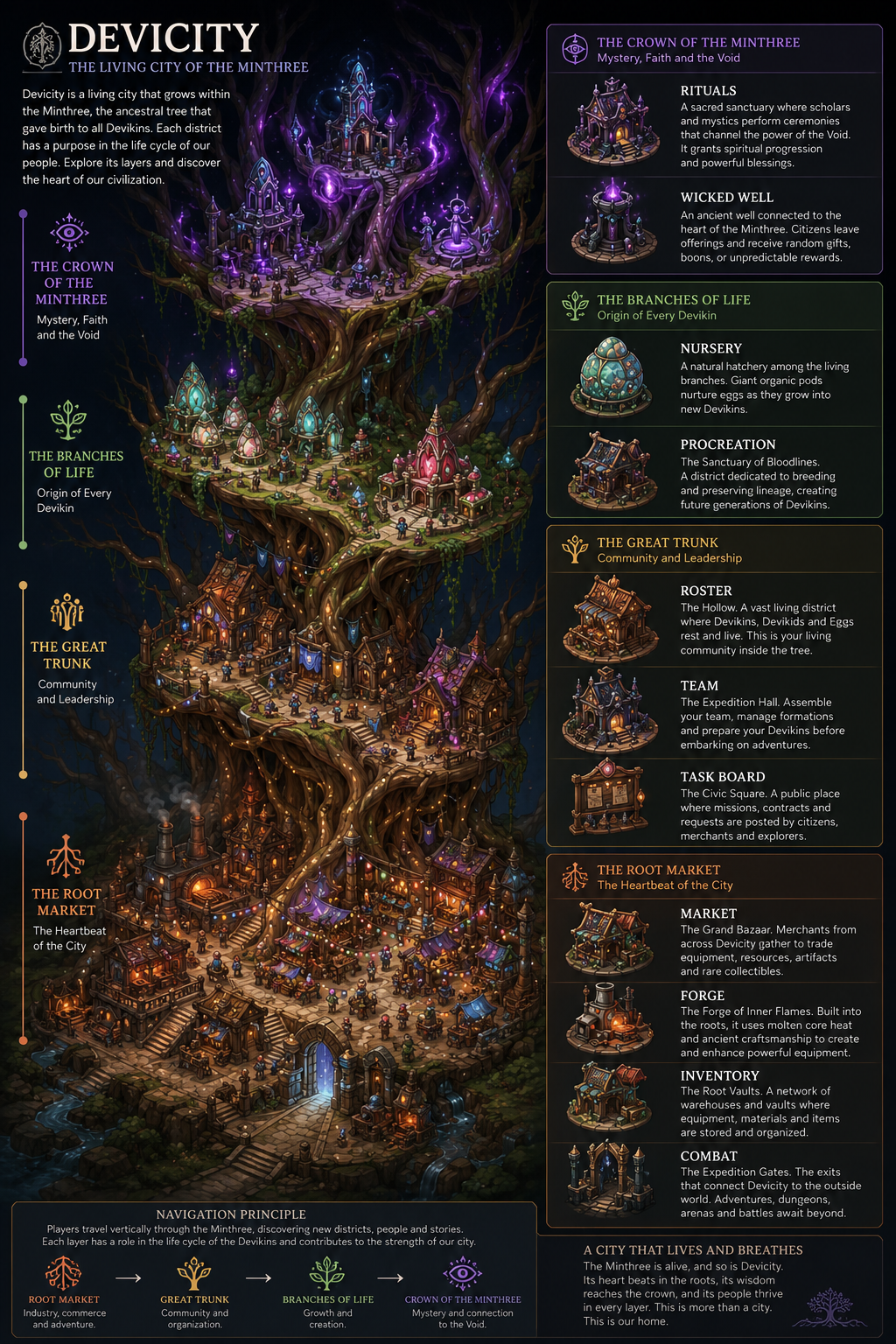
Industry, commerce and adventure
The roots gathered systems related to resources, equipment, trade and external adventures.
Community and leadership
The trunk organized character management, team preparation and the activities connecting citizens and players.
Growth and creation
The living branches represented origin, growth and the creation of future generations of Devikins.
Mystery, faith and the Void
The crown grouped spiritual progression, transformation and unpredictable interactions with the Void.
Existing product context
Over time, Devikins had accumulated destinations, events, progression systems, resources and shortcuts. The existing hub exposed many of them at once, but their relationship depended heavily on labels and player memory.
The redesign treated this as more than a visual-density problem. The product needed a clearer model explaining where each activity belonged and how players moved between them.
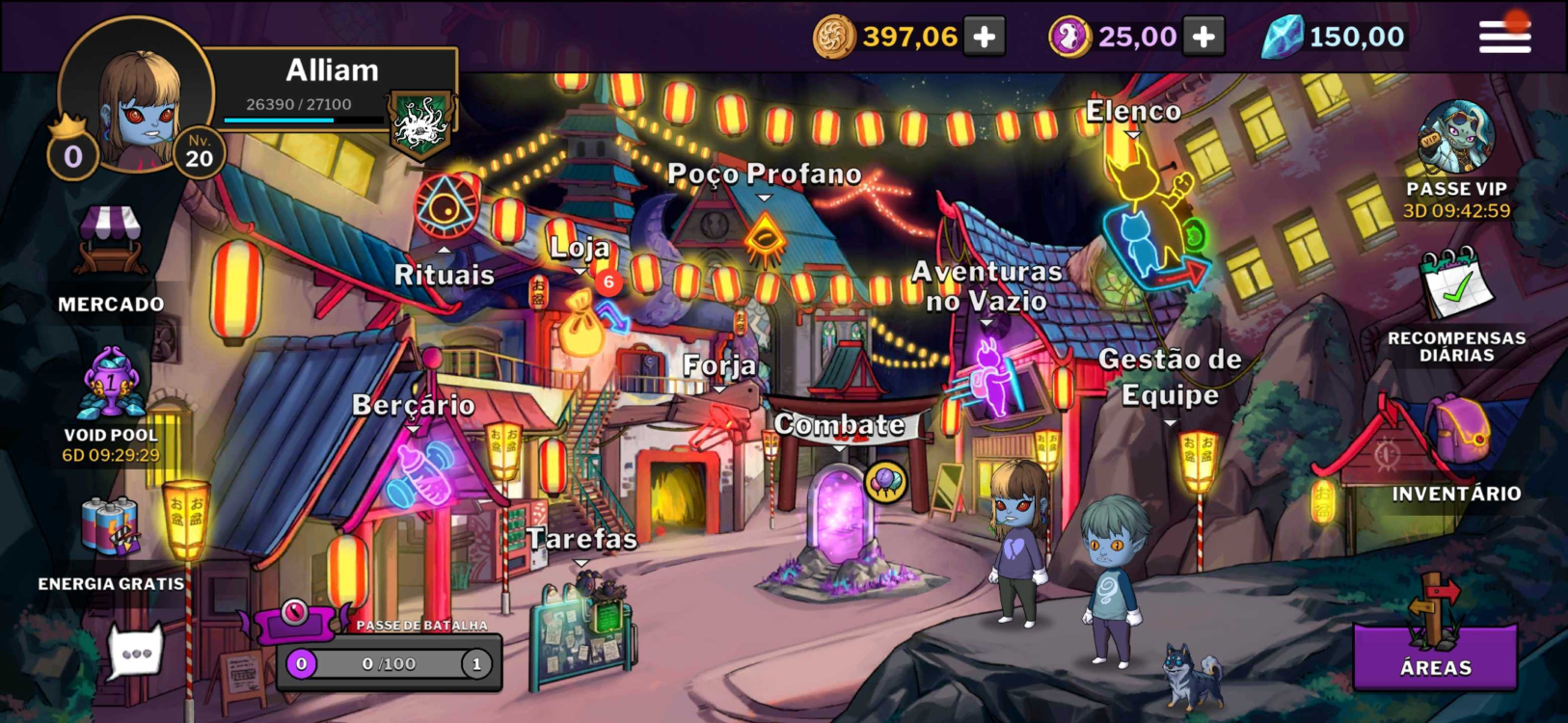
The existing hub gathered many systems into one surface, but did not provide a unified spatial model connecting them.
Reframing the Mintree
Instead of beginning with new menus, the redesign started by reconsidering the Mintree: the ancestral tree that gave birth to the Devikins.
The tree became more than a lore element. It became a living city whose vertical structure could group systems, define destinations and communicate progression.
Lore became information architecture.
Navigation principle
Players would travel vertically through the Mintree, discovering districts, characters and systems as part of the same world rather than navigating a flat collection of unrelated menus.
Spatial exploration
Each destination was explored as a physical place with its own role, circulation and relationship to the surrounding city.
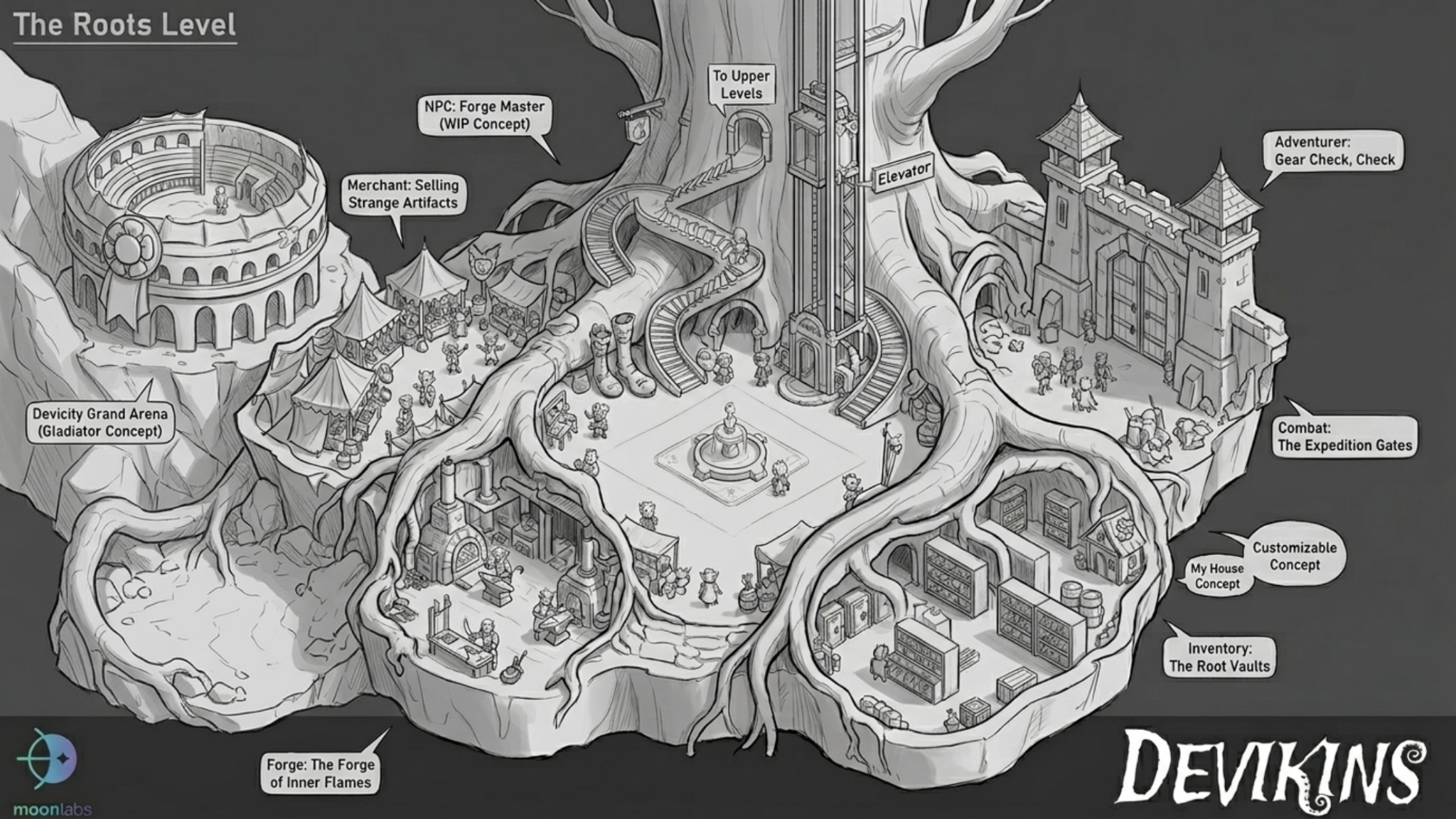
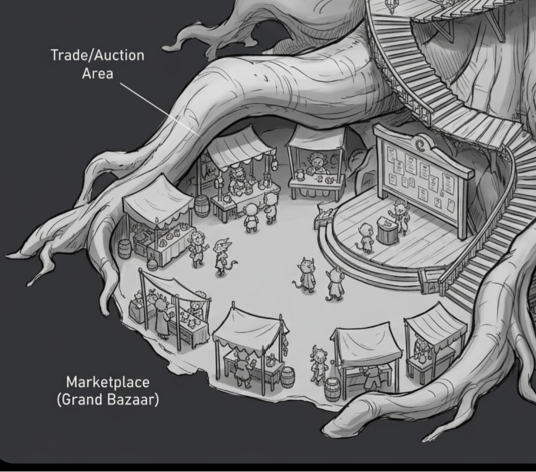
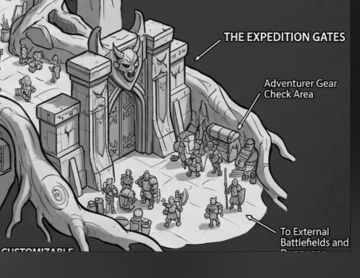
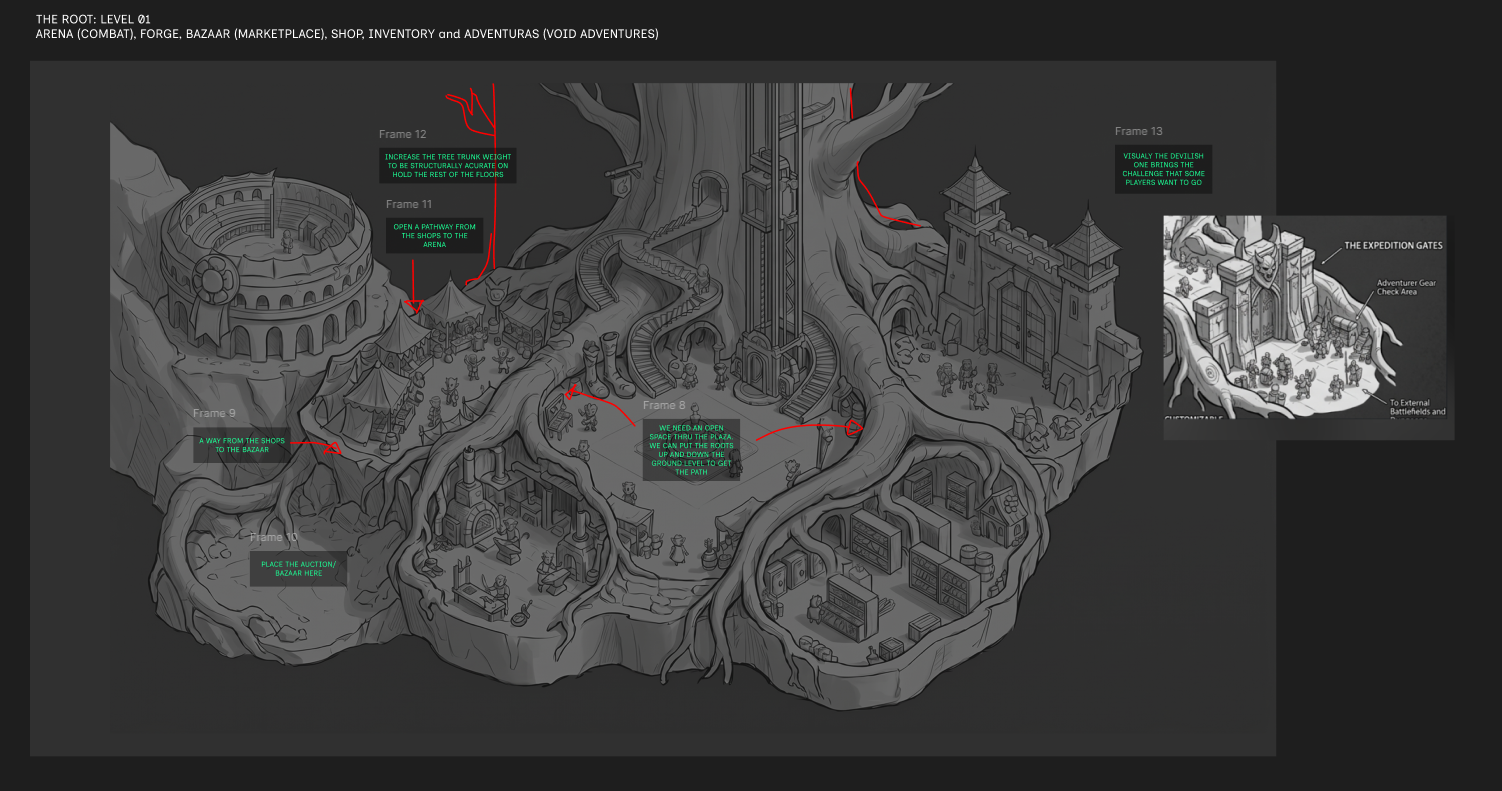
Annotated iteration exploring routes between destinations, central circulation and access through the Roots Level. Open full-size iteration ↗
Process commentary
The iterations examined how players would enter each destination, understand where paths led, discover NPCs and move between activities without returning to a flat menu after every action.
Roots Level concept direction
The Roots Level brought together systems related to combat, commerce, crafting, inventory and preparation for adventure.
Instead of appearing as disconnected buttons, these systems were represented as destinations around a shared public space, connected by visible paths, stairs and vertical access to the rest of the Mintree.
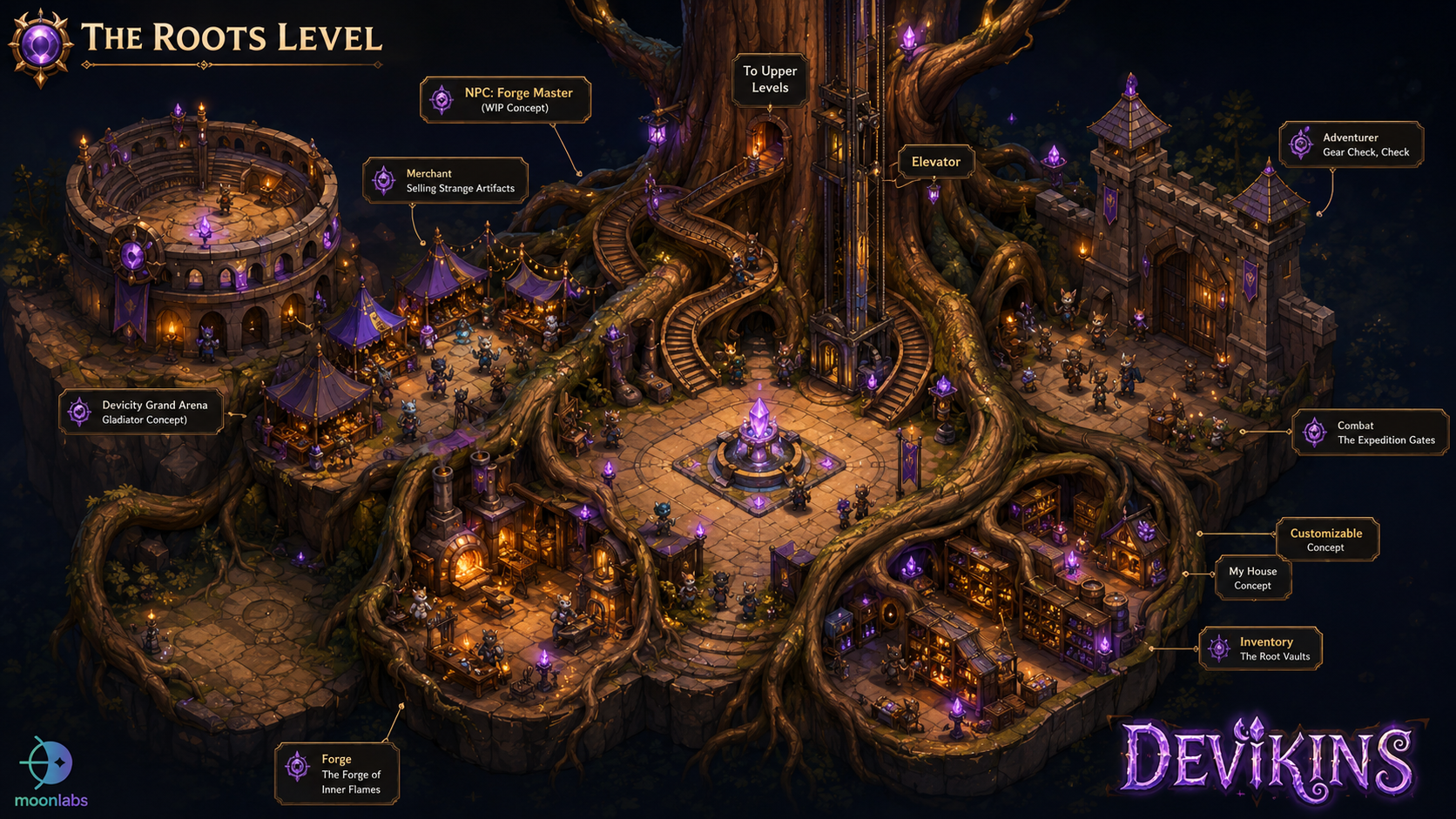
Concept direction containing proposed and work-in-progress destinations; not a released game environment. Open full-size concept ↗
Product model
Feature → Place → District → World → Player journey
By translating systems into locations, the redesign aimed to give players a spatial model they could use to understand both the game world and the product.Next product story
Devikins required restructuring an existing world with years of accumulated systems. Dobro Goranku required creating the visual and interface foundation of a new game ready for its first release.
Continue to Dobro Goranku ↓02 · New product
Building the visual foundation of a new trading card game.
MVP shipped · October 2025Foundation
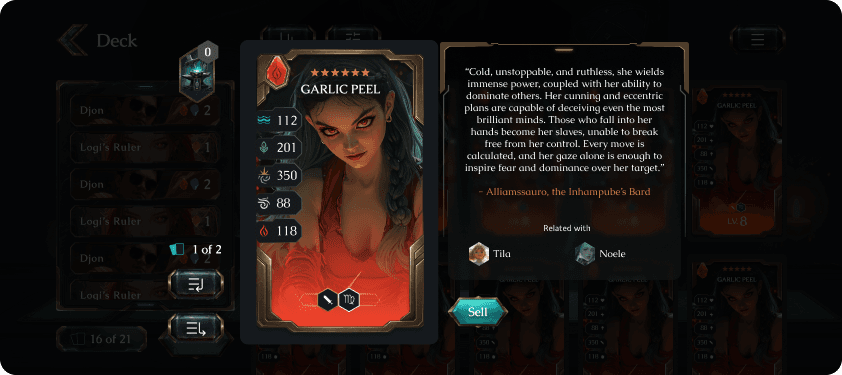
The project required establishing a visual language capable of supporting gameplay while remaining feasible for a first release. Each decision needed to clarify the game and translate into production-ready material.
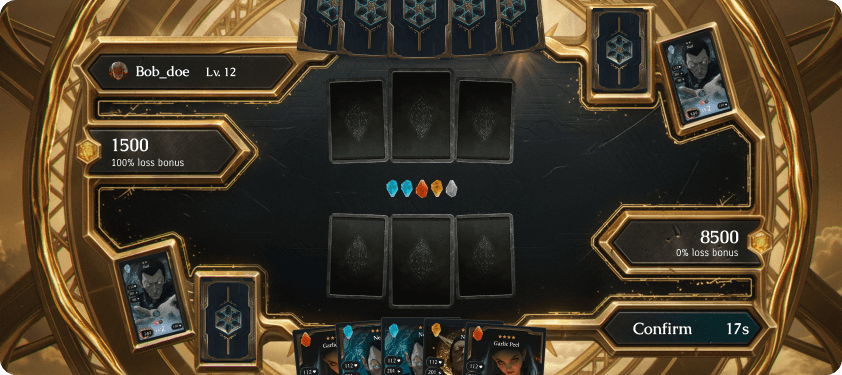
Visual language
The visual foundation brought hierarchy, typography, iconography and game states into one consistent language. This gave the MVP enough structure to communicate gameplay while leaving room for the product to evolve.
MVP
The work focused on production-ready interfaces and assets supporting the MVP launched in October 2025.
The MVP launched in October 2025 and remained the active product until MoonLabs ceased operations in June 2026.
Comparison
Together these projects demonstrate my ability to work both upstream, shaping product concepts and navigation models, and downstream, producing the visual assets and interfaces required for implementation.
Closing
Across both games, the work involved translating complex systems into experiences players could navigate, understand and use.
One project required restructuring an existing world. The other required creating the visual foundation of a new one.